War Rock & Gnamma Hole
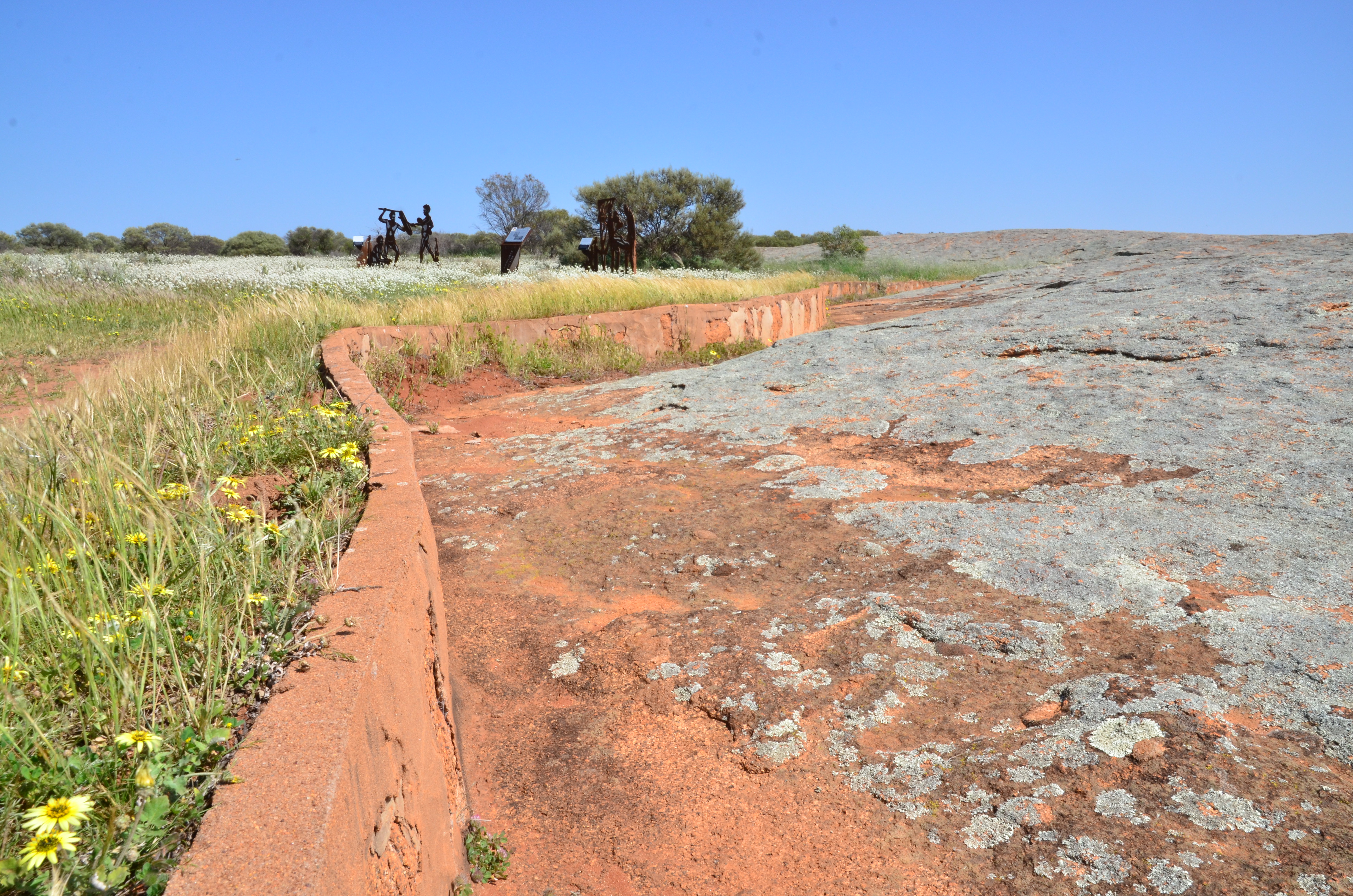
War Rock is steeped in local history and legend. It is said that the site received its name following a conflict between two boundary Aboriginal tribes many years ago. Nearby is a natural gnamma hole, which typically fills with water after winter rains. In earlier years, a larger gnamma hole in the area was filled with earth to prevent livestock from falling in.
Pintharuka Dam was constructed in 1936 to provide a reliable water supply for local settlers. Much of the excavation work was completed using a two-ton Holt crawler tractor ( which if you pop into the Historical Museum in Morawa you may be able to see one up close!), with additional assistance from horse-drawn dam scoops and manual labour using picks and shovels. Approximately 1,800 cubic yards of earth were removed during construction.
Water was channelled into the dam through an extensive network of rock walls and drains built as part of Depression Relief Employment projects. Many workers and their families camped at the site during construction, with some children attending the nearby Pintharuka School. Local farmers supplied essentials such as butter, milk, and eggs to those living and working in the area.
The dam officially became a public water supply on 5 June 1937 and was later fitted with a protective roof. Today, the surrounding bushland is home to a diverse range of native birds, wildflowers, mammals, and reptiles, making it a popular destination for visitors seeking to experience the region’s natural beauty.
Providing a stunning backdrop are the Moonagin, Karrakarook, and Milhun Ranges. During wildflower season, these ranges transform with vibrant displays of everlastings that stretch to their highest peaks, creating a spectacular and ever-changing landscape.
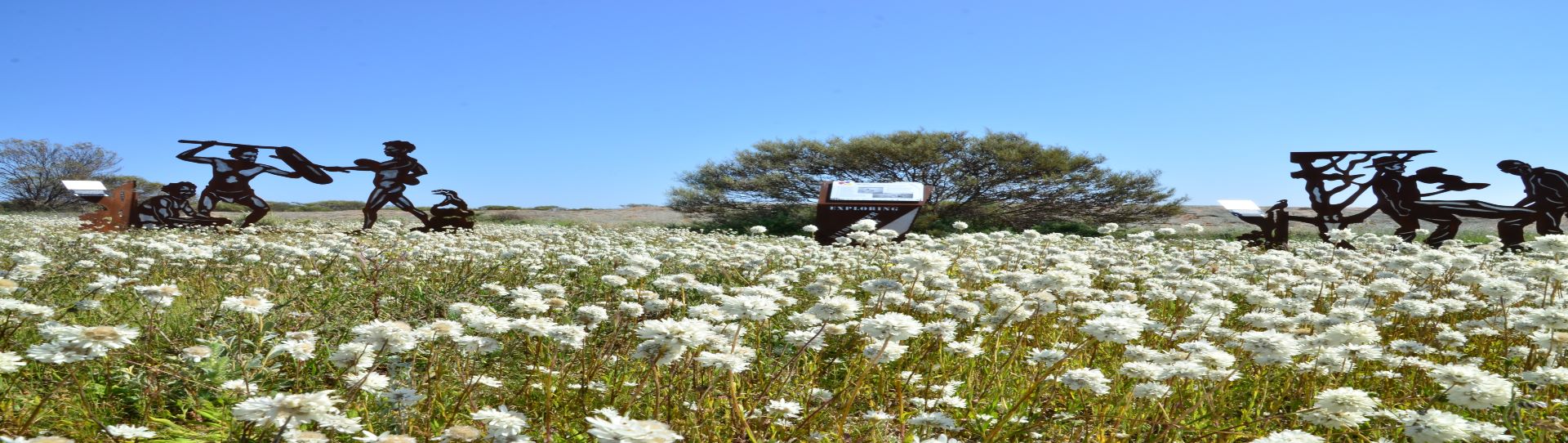
These days the area comes to life during spring with fields of everlastings, if the perfect place to stop and stretch your legs!